Epistemic note
This project constitutes a deductive structure based on constraints and invariants,
not a philosophical hypothesis nor a physical theory.
Its contents are not evaluable in isolation:
each individual page presupposes the full conceptual structure of the site.
Any judgment formulated without examination of the complete context
is necessarily partial and non-conclusive.
The distinction between structural deduction and interpretation
is an integral part of the model.
Radial Periodic Table
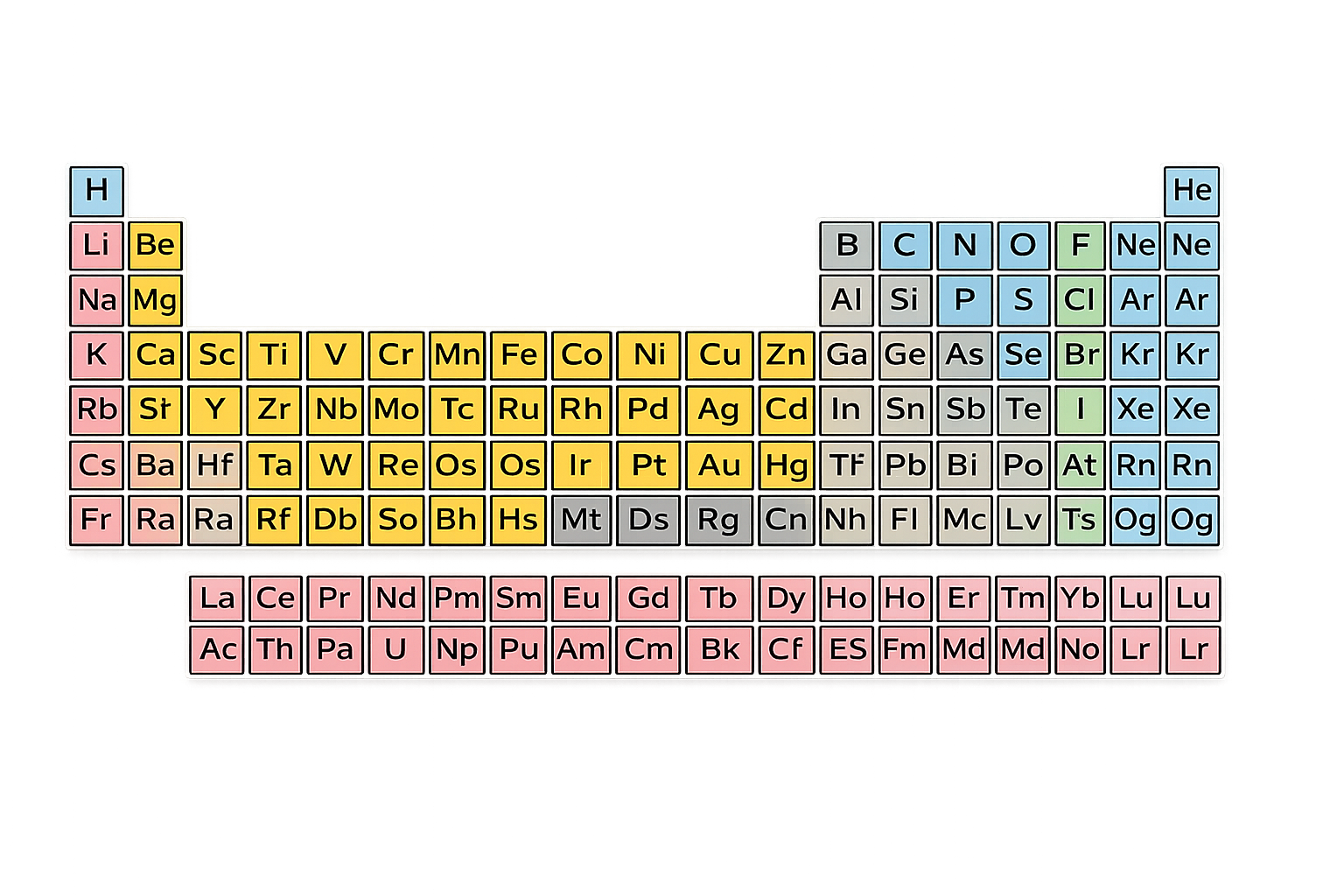
The classical periodic table organizes elements into rows and columns, as if matter were an ordered list. This representation is useful, but it hides an important fact: matter does not grow in blocks, but through expanding fields.
On this page we present a periodic table arranged along a golden-angle spiral, where elements do not occupy fixed boxes, but positions along a continuous trajectory. It is a different way of looking at the same content, one that reveals new patterns more coherent with the vision of the Sphere of Everything.
1. The golden-angle spiral
We start from a central point and place elements along a spiral that rotates by approximately 137.5° at each step: the so-called golden angle, the same found in sunflower seed patterns and in natural structures that must fill space efficiently.
Each element occupies a position along this spiral. The radius grows with atomic number, while the angle wraps according to the golden sequence. The result is a radial arrangement, free of rigid symmetries yet extremely ordered.
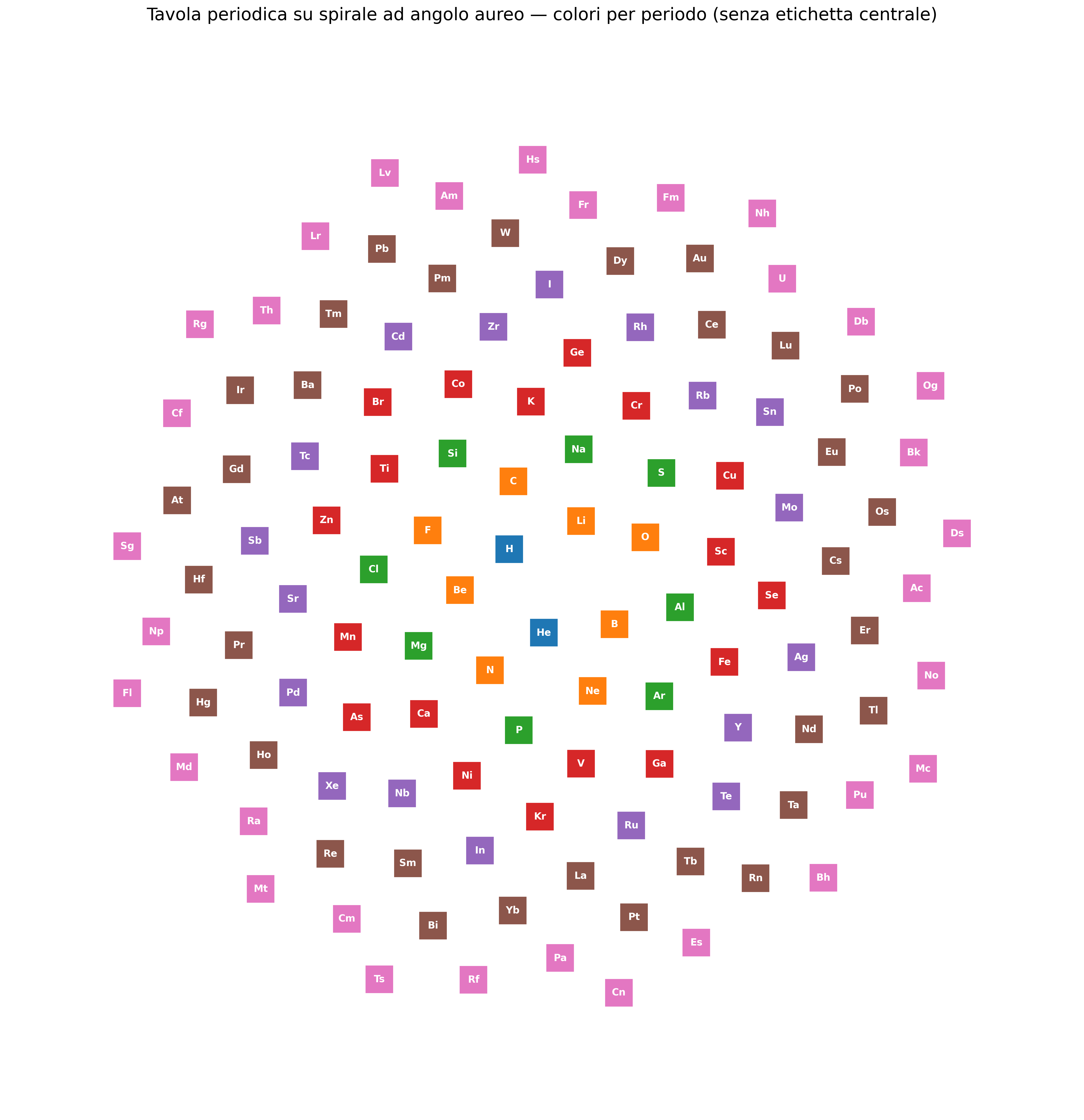
In this first version, colors represent periods. Rows disappear and become expanding rings: matter truly appears to expand as energy levels increase.
2. From rectangle to field: what the radial structure reveals
When observing the radial table, several patterns immediately emerge that the rectangular version tends to hide:
The table is no longer read as a grid, but as a field of forces. It is the same matter, seen from another perspective.
3. The same spiral, colored by families
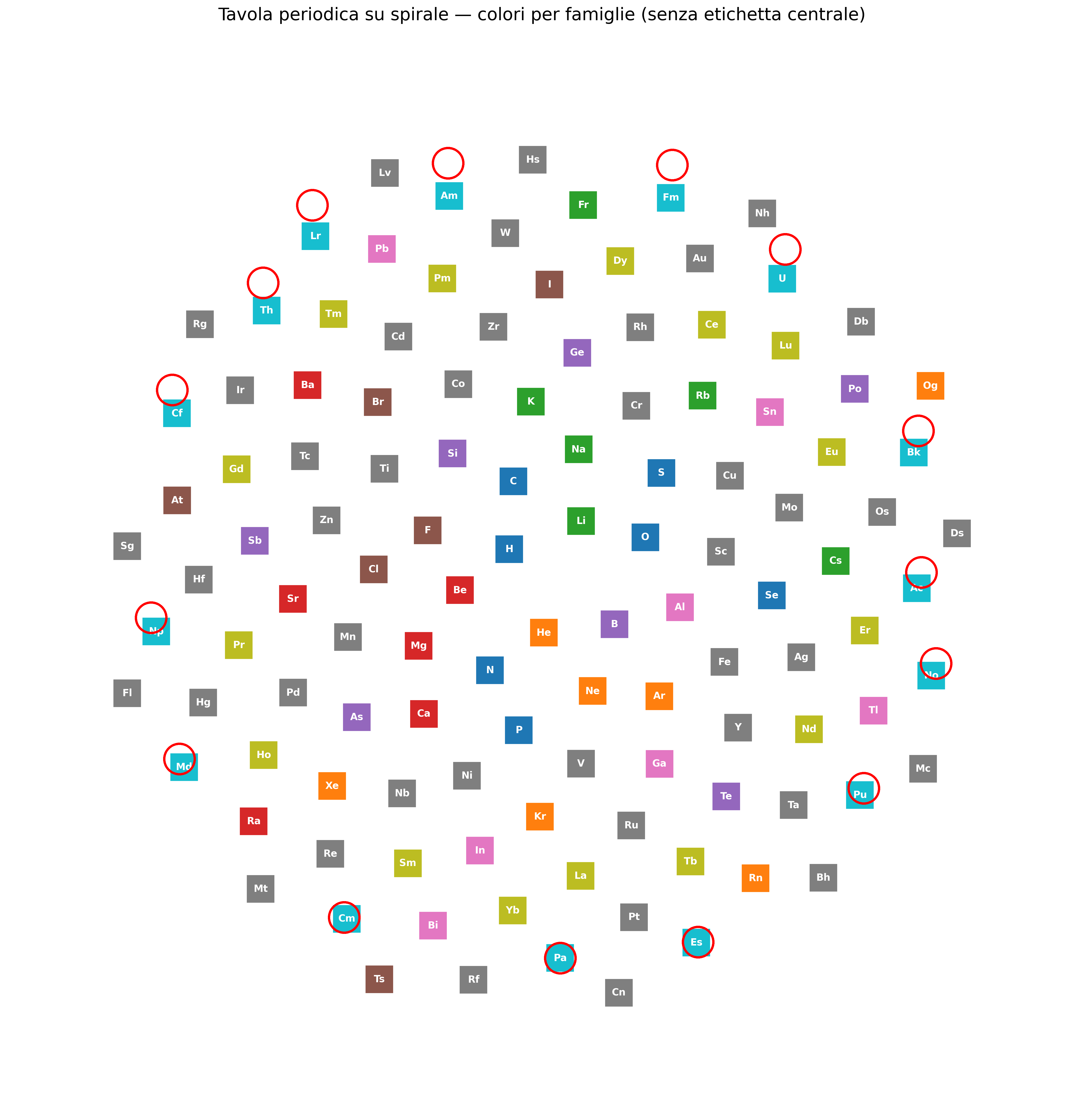
In the second version of the radial table, element positions remain identical, but color meanings change: no longer periods, but chemical families.
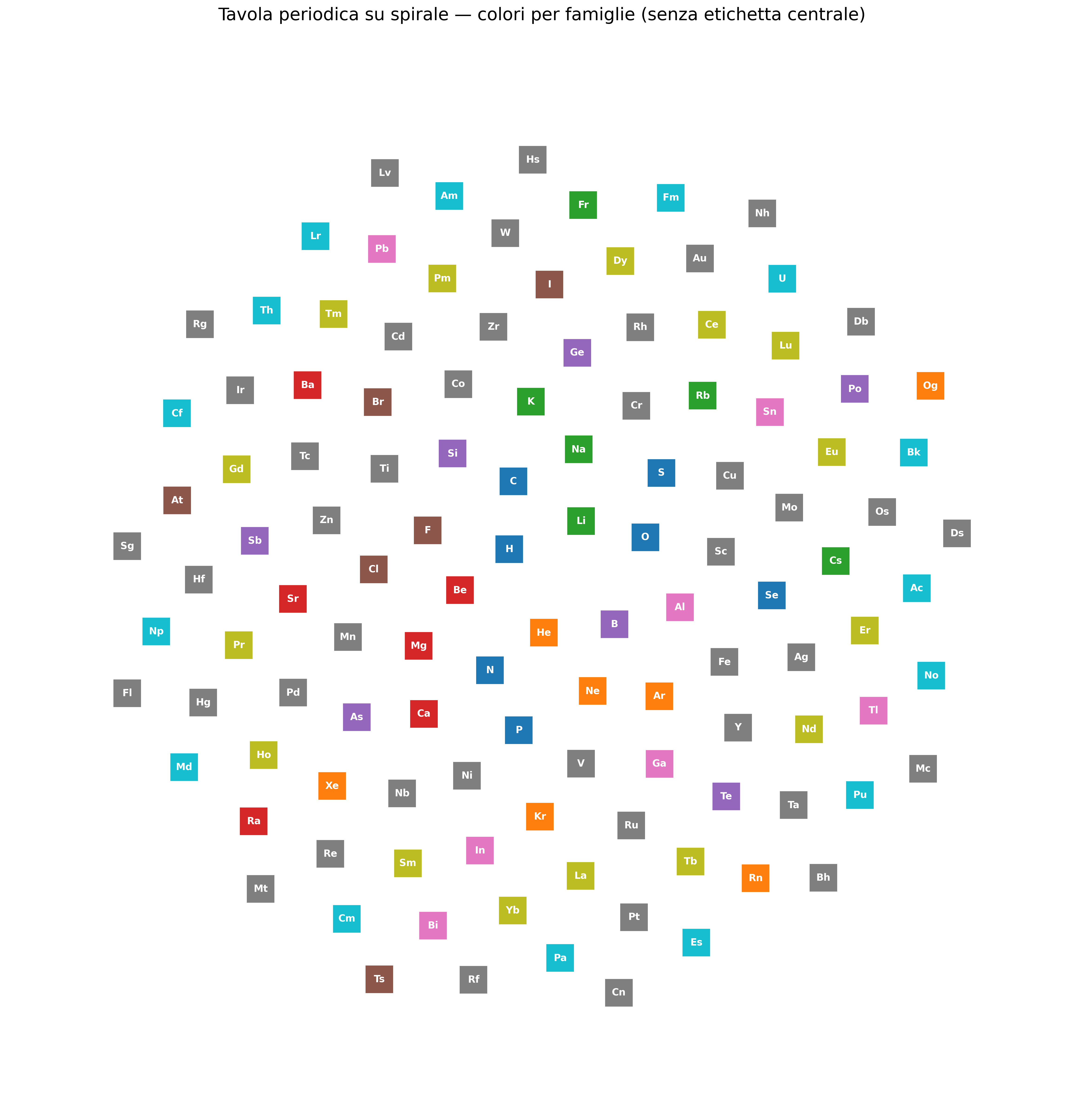
Here the hidden structure emerges more clearly: colors show that each family is not confined to a column, but distributed along the spiral, tracing directions and arcs that express shared behavior.
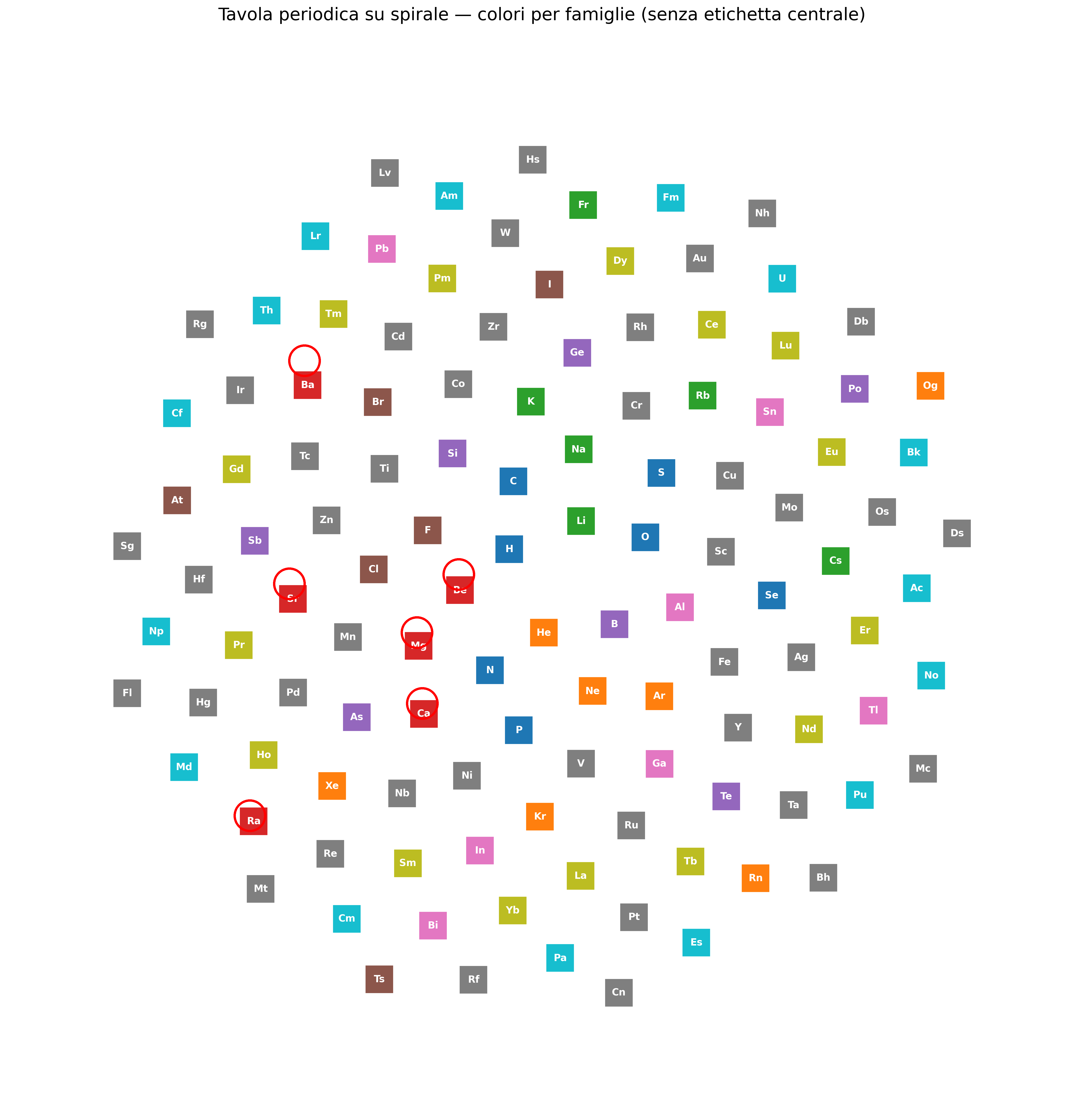
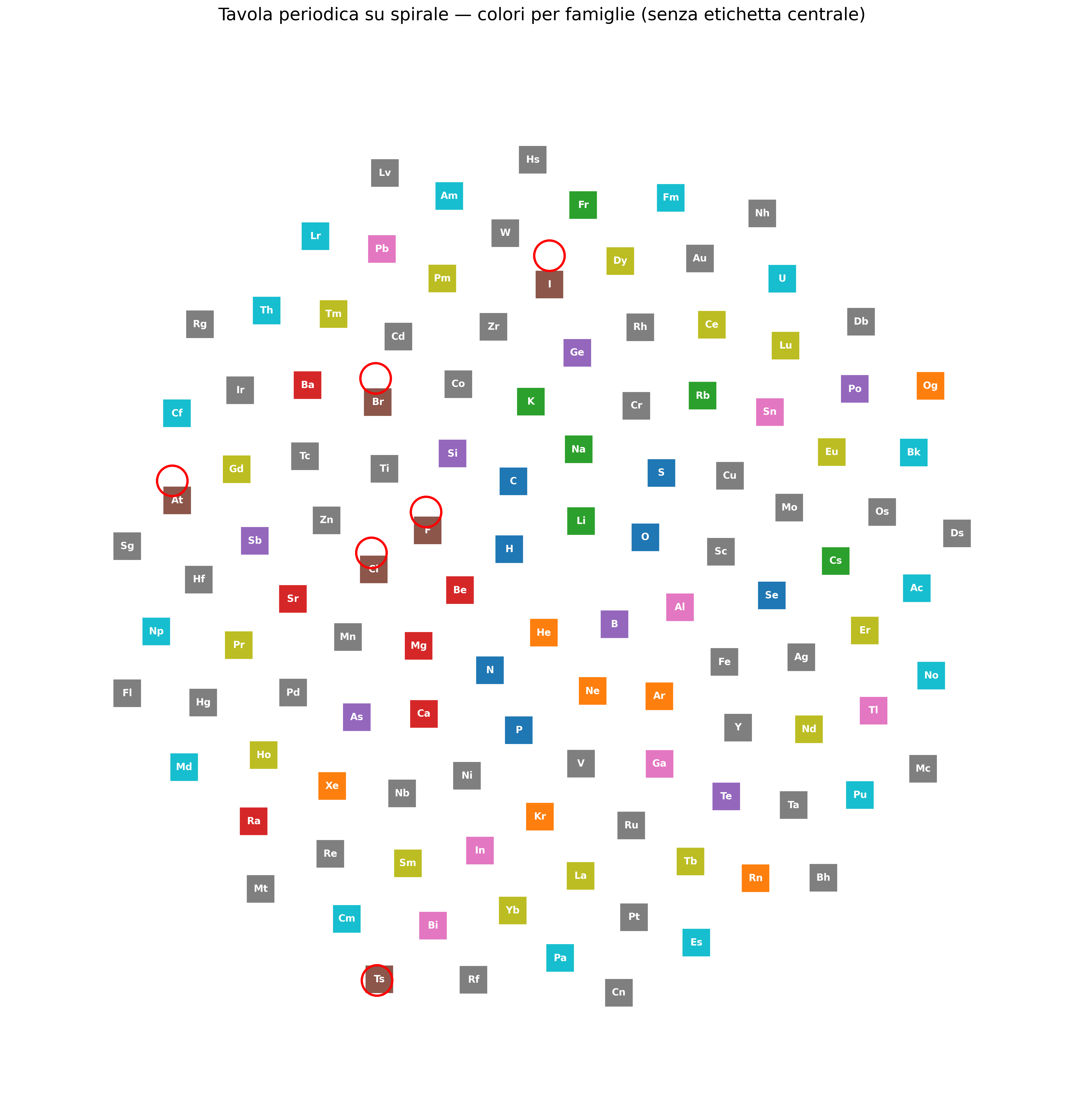
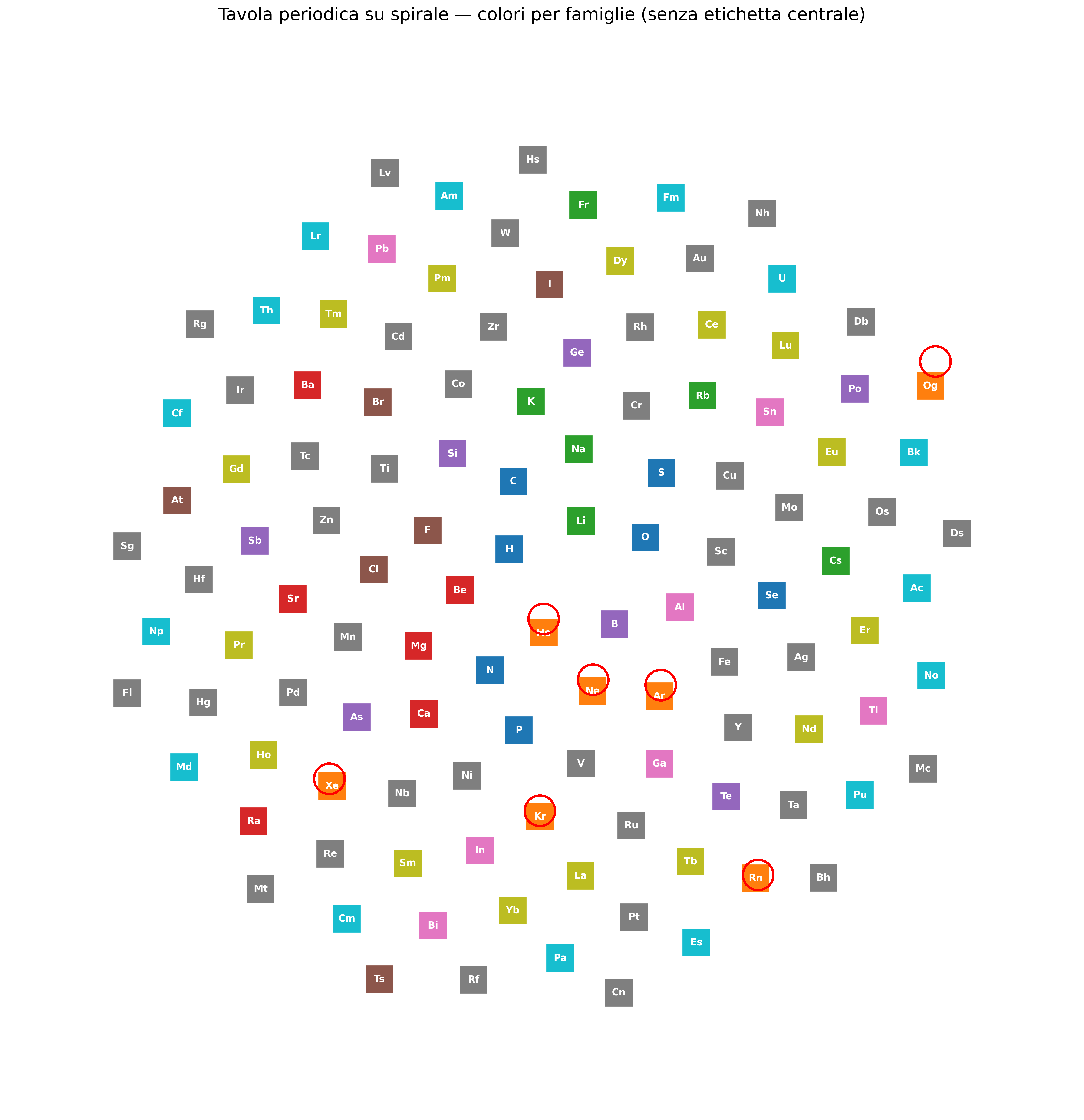
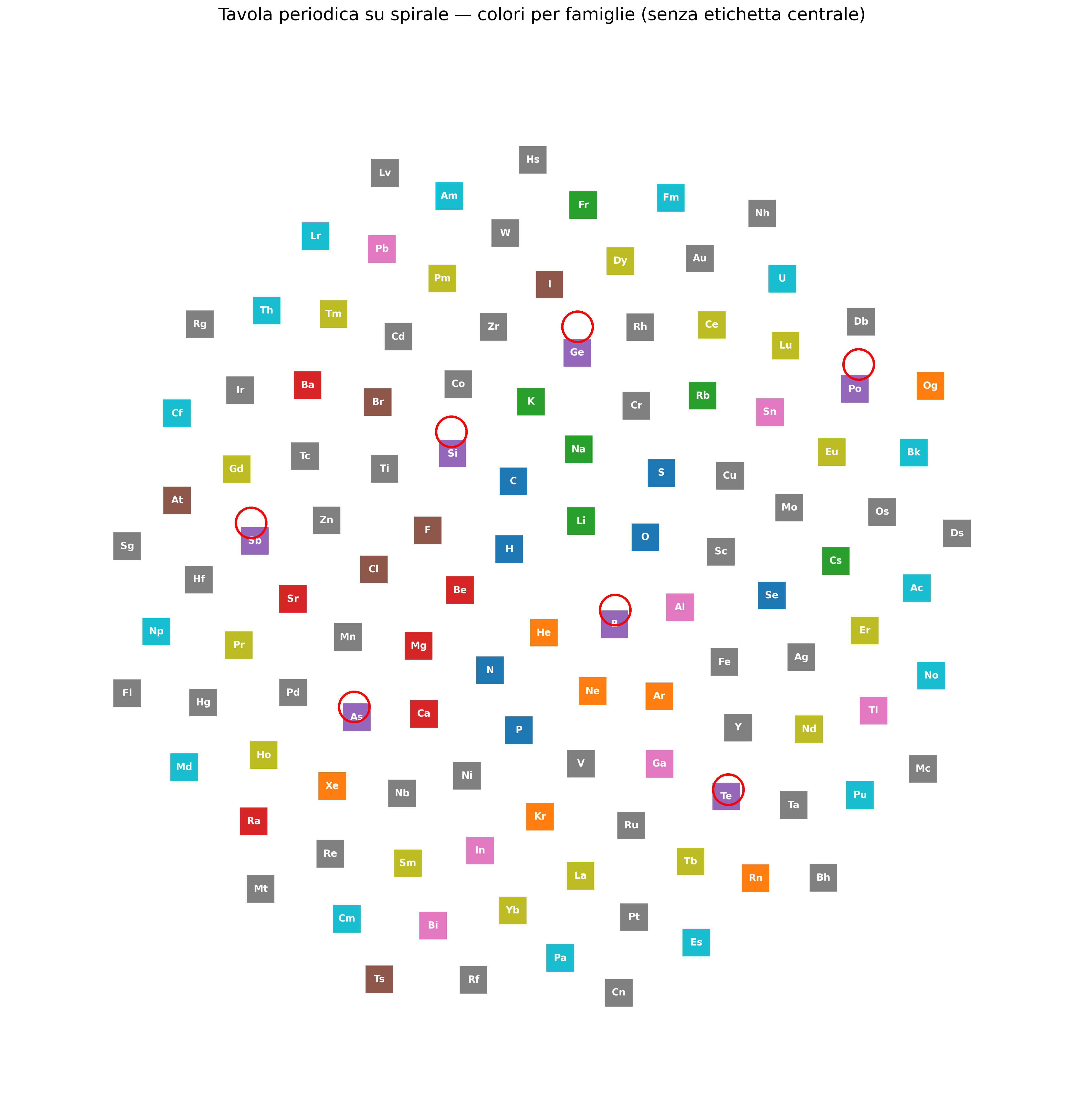
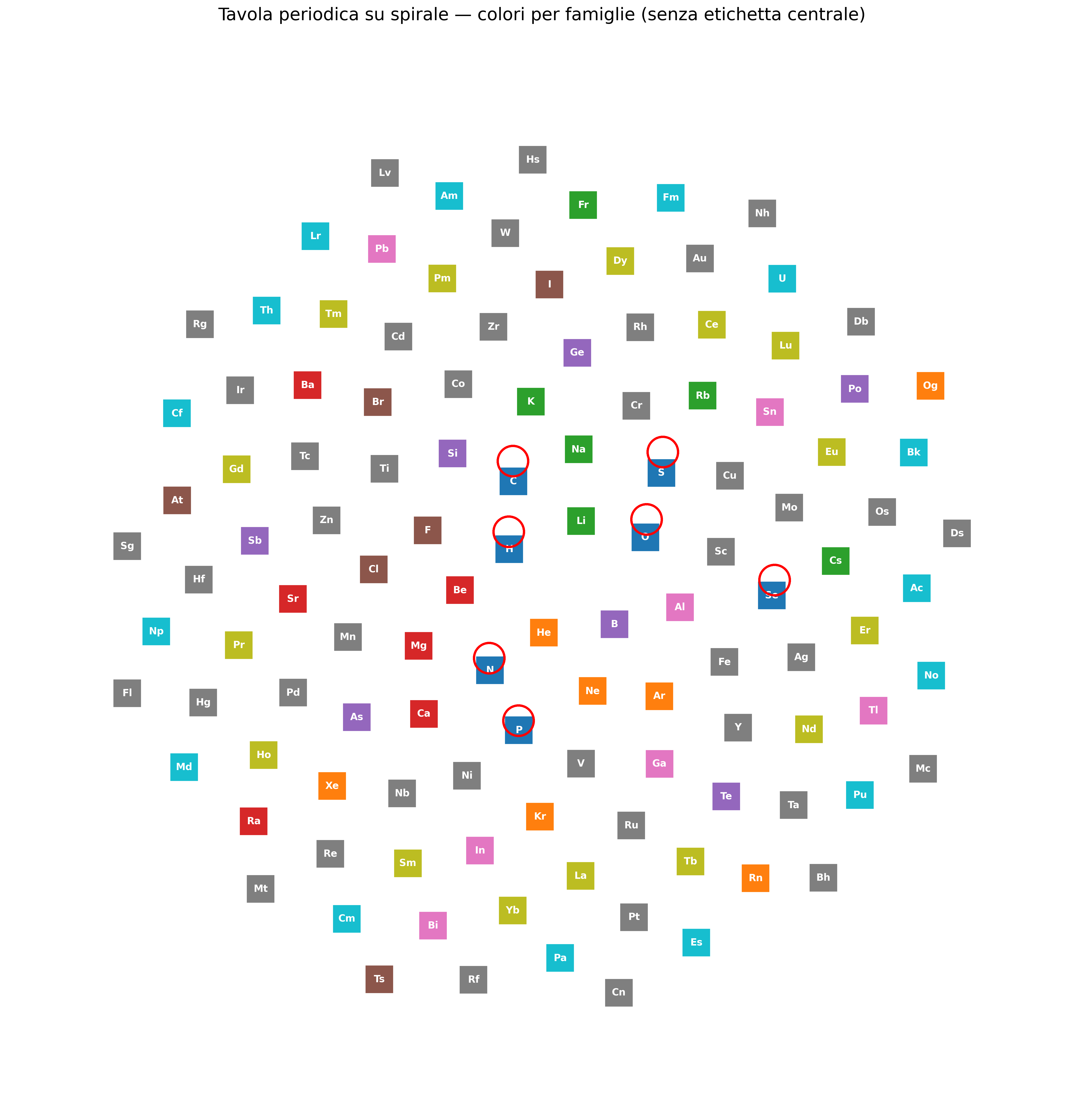
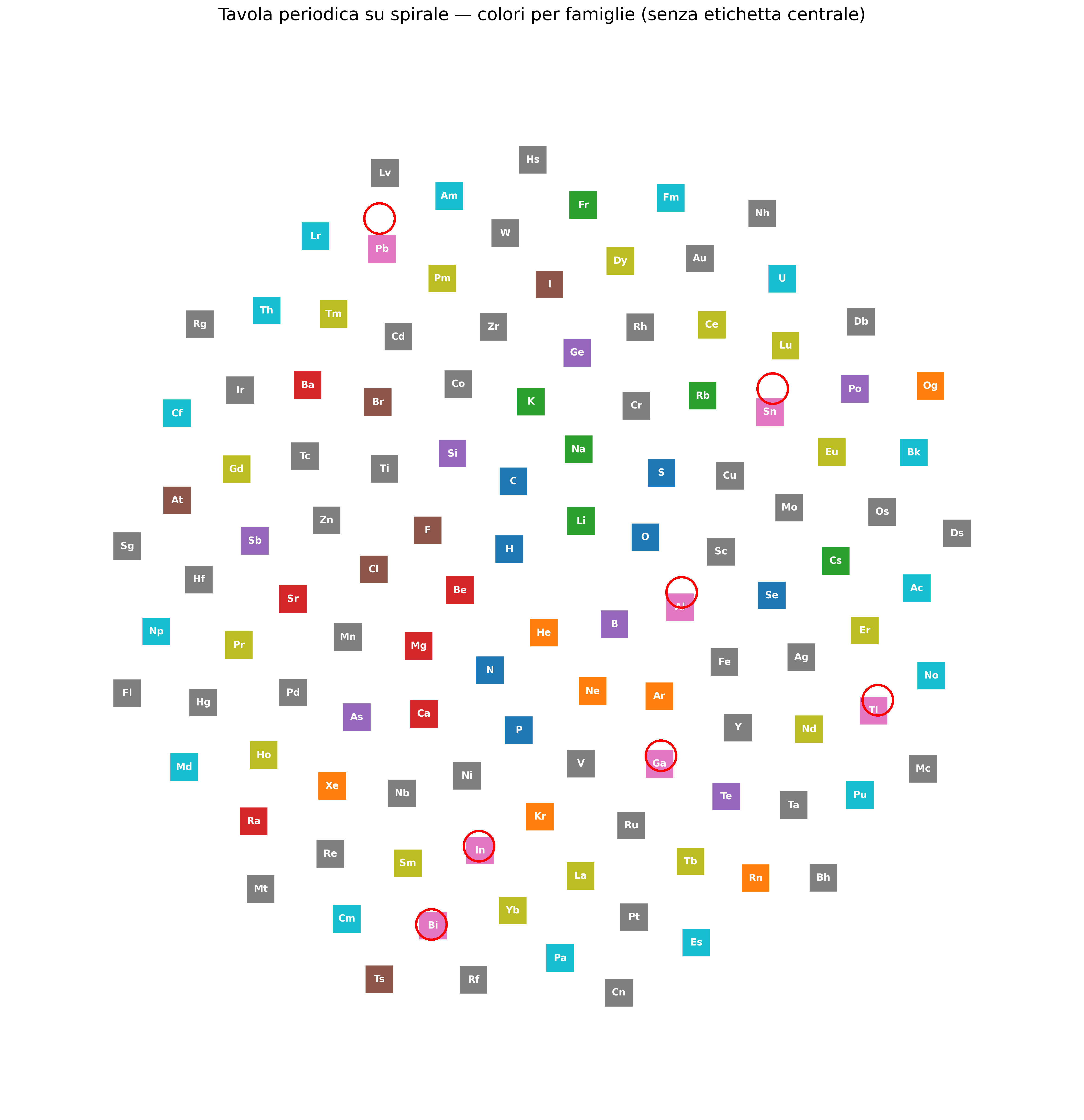
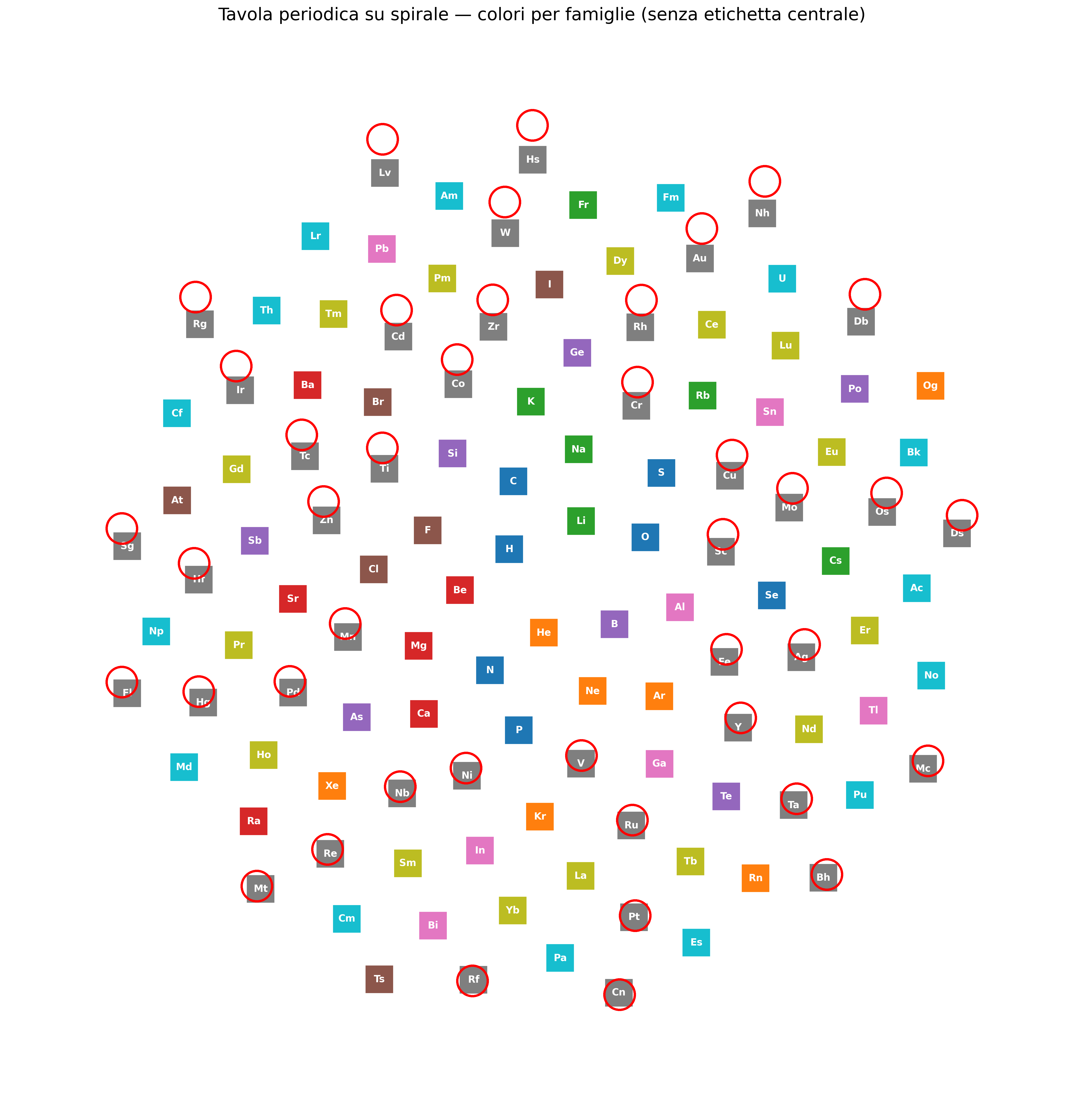
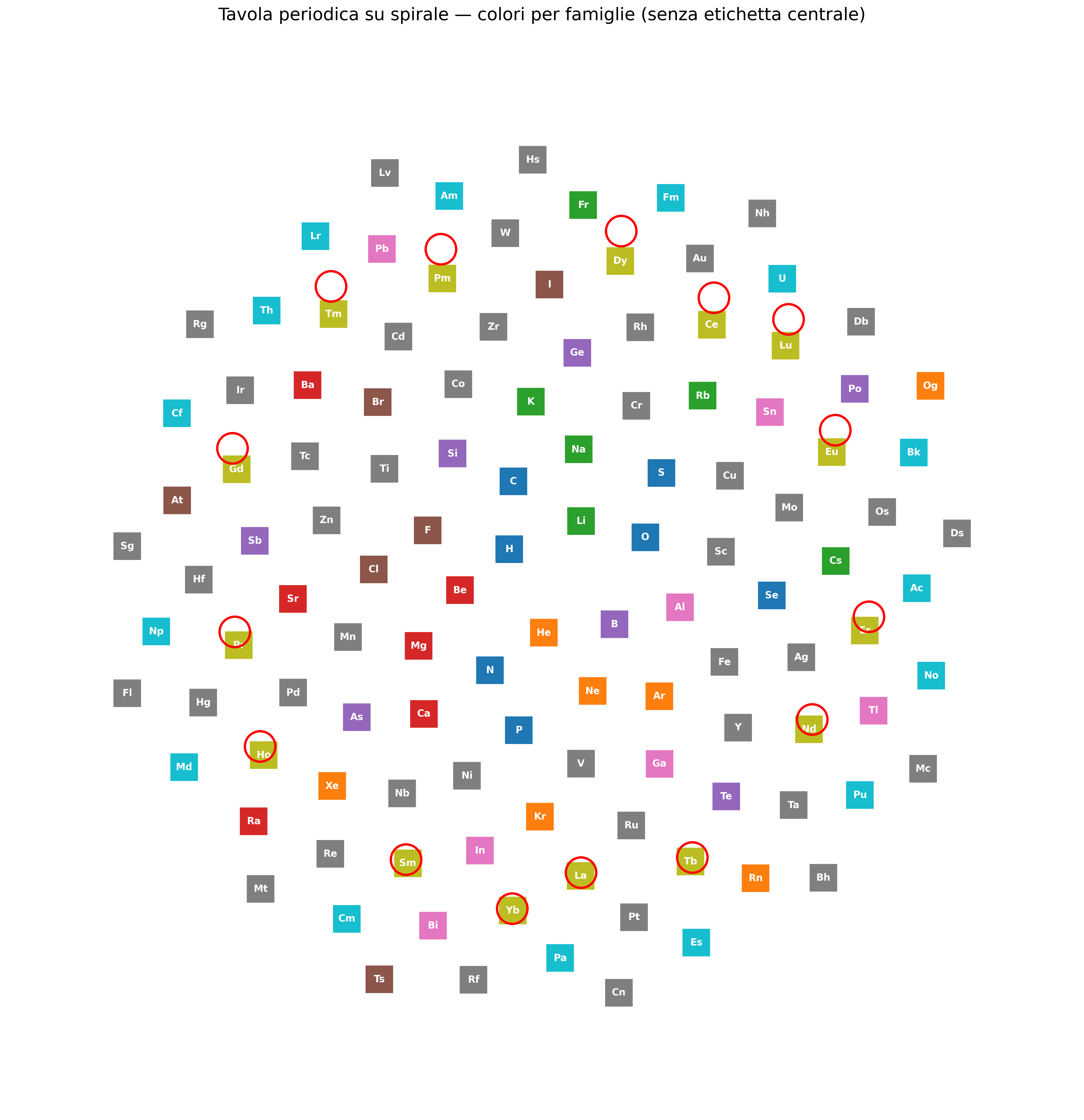
4. Families highlighted
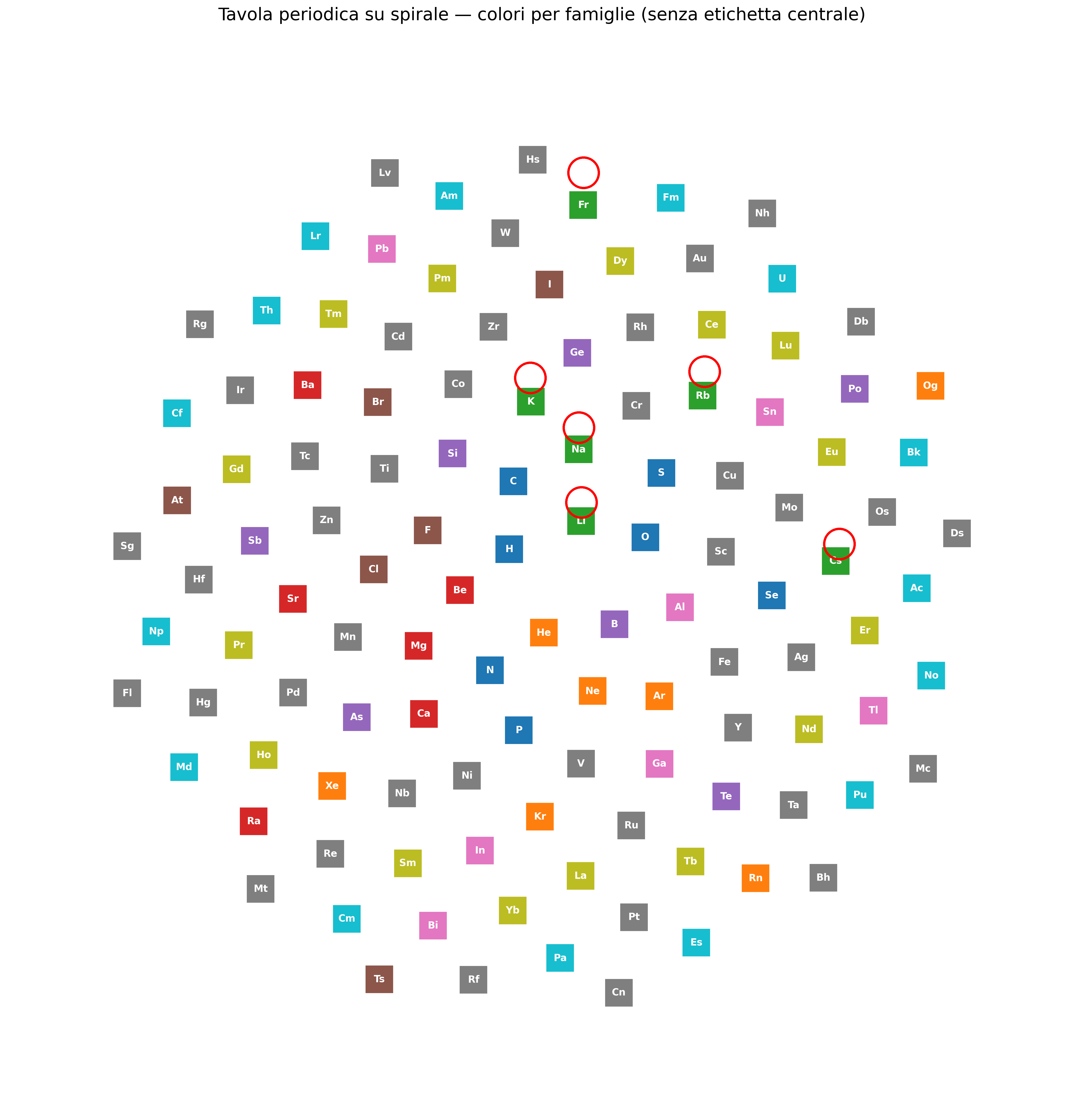
To make the structure even clearer, each family can be isolated: the same table, with a single group of elements highlighted. In this way the spiral becomes a map in which each family draws its own “trajectory”.
5. Connection with the Sphere of Everything
The radial representation is not a graphical exercise: it is the intermediate step between the flat table and the Sphere of Everything.
The golden-angle spiral naturally accepts curvature: one only needs to imagine lifting the outer edge for the table to begin bending into a hemisphere. Noble gases become a boundary, alkali metals become directions of expansion, and transition metals form a load-bearing band.
In this way, the chemistry we know fits into a broader framework in which:
The radial periodic table thus becomes a conceptual gateway: the point where classical chemistry ceases to be a table and becomes a geometry, ready to merge with the spherical vision of reality proposed by the Sphere of Everything.